
What We Install
Interlocking Paver Services in San Antonio & the Texas Hill Country
We specialize in one material system — interlocking concrete pavers — installed with an engineering-first approach built for the Texas climate.
Flagship Service
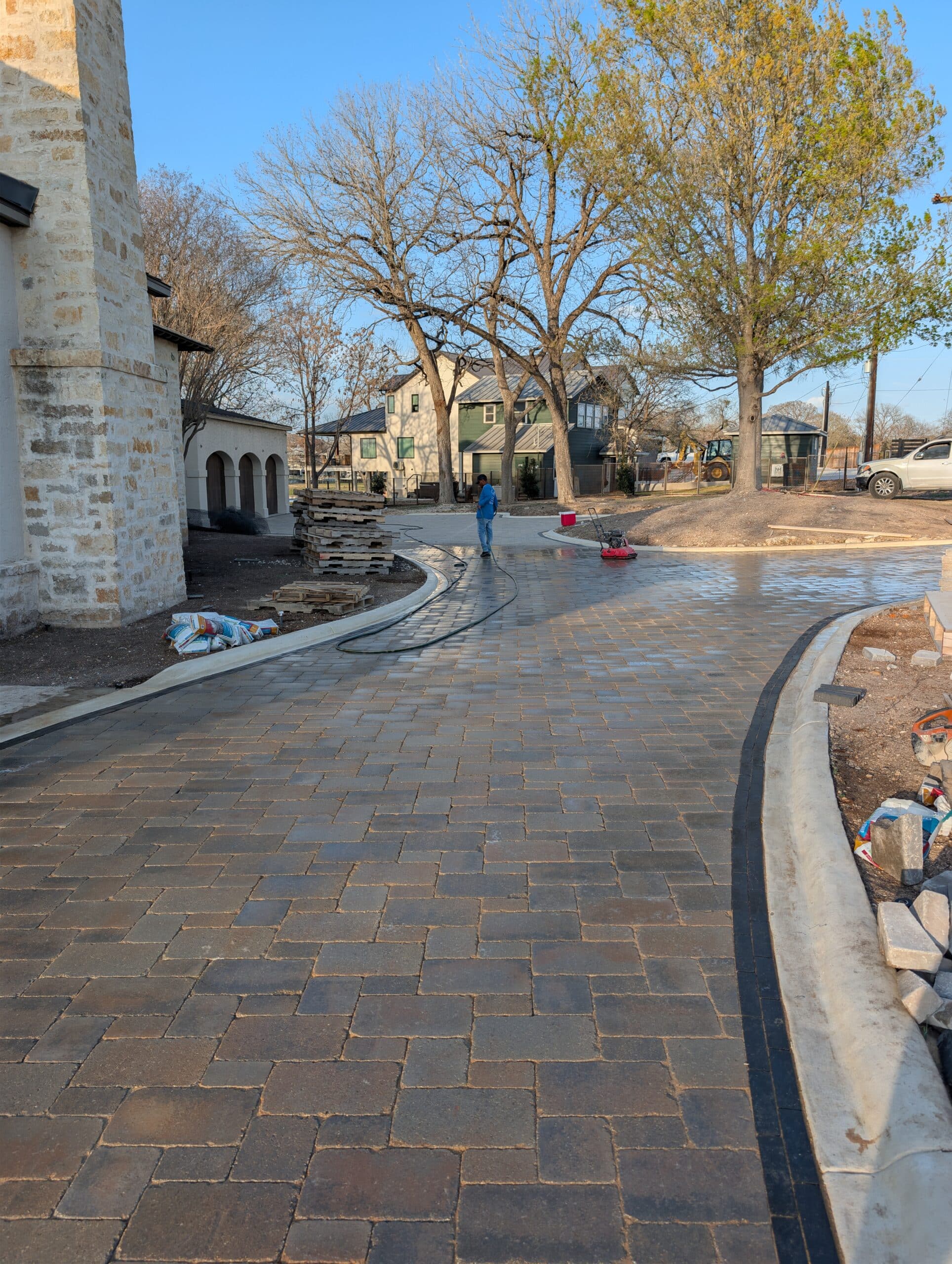
Interlocking Paver Driveways
A driveway is the most structurally demanding hardscape surface on a residential property. It carries vehicles daily, absorbs thermal stress from the Texas sun, and sits above soil that expands and contracts with every wet season. Get the base wrong and you’ll be looking at a redo in five years. Get it right and it performs for decades.
Vision Grounds driveway installations begin with a 12-inch excavation — calibrated for vehicle load and Central Texas clay conditions. We install Tensar HX145 Geogrid to distribute load laterally through the base, geotextile fabric to prevent soil contamination, and an open-grade angular stone base that drains freely rather than trapping water. The perimeter is locked in with a concrete beam edge restraint reinforced with rebar and fiberglass.
- 12-inch excavation — engineered for vehicle loads and Texas clay soil
- Tensar HX145 Geogrid structural reinforcement layer
- Geotextile fabric separation layer
- Open-grade angular stone base system
- Concrete beam edge restraint with rebar and fiberglass — all perimeters
- Unilock Ultima™ Technology — up to 4× the strength of standard concrete
- EasyClean™ stain resistance on applicable products
- Pattern options: herringbone, running bond, basketweave, custom
- 4-year workmanship warranty
Service
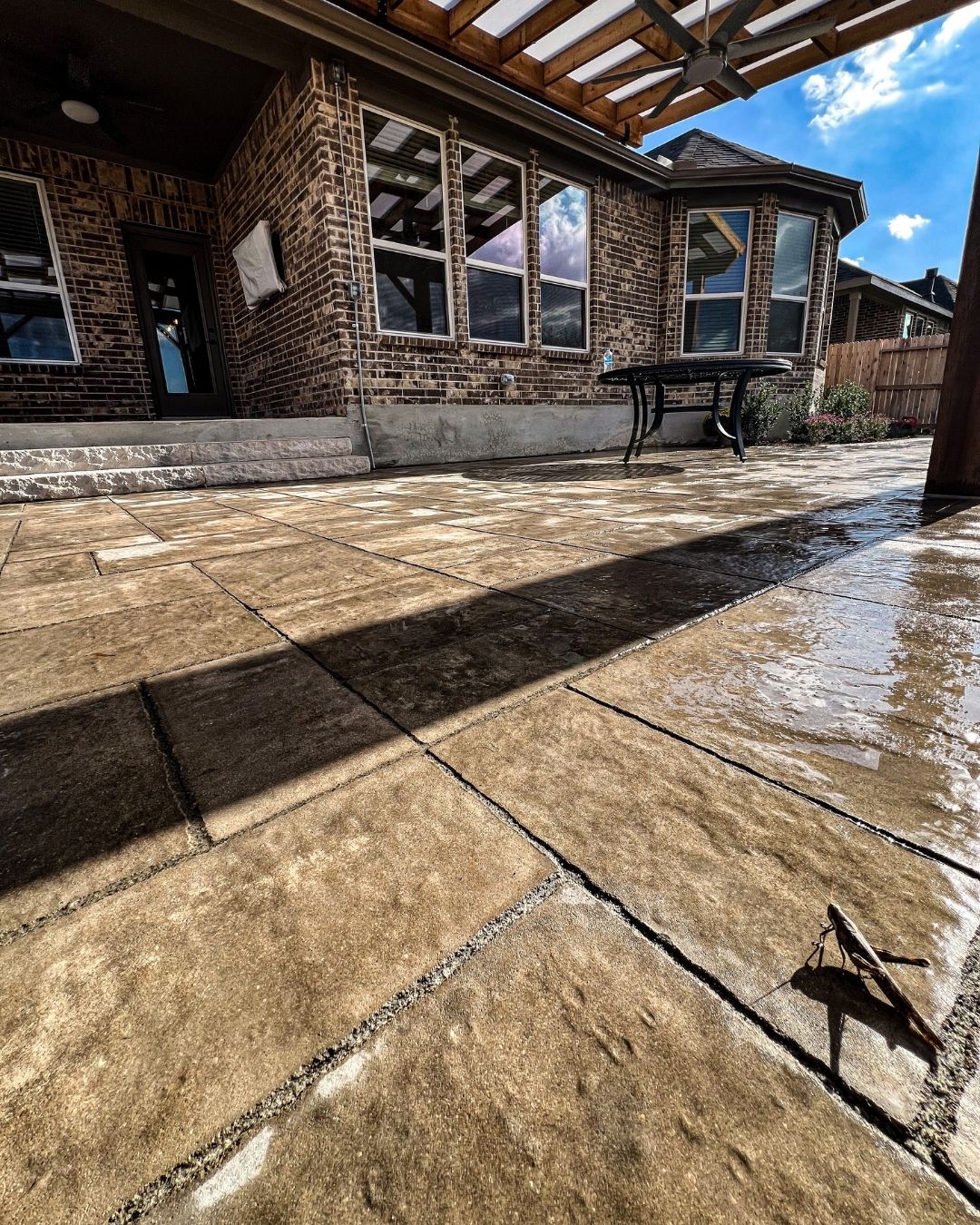
Custom Patios & Outdoor Living
A paver patio done well becomes an outdoor room. Done poorly — with a shallow base, cheap edge restraint, and no drainage plan — it becomes a maintenance problem within a few seasons. The difference isn’t visible on day one. It shows up three years later when sections start to shift.
Vision Grounds patio installations use a 4–6 inch base system calibrated for pedestrian loads, with geotextile fabric, open-grade base, and concrete beam edge restraint on every project. Drainage grade is engineered before a single stone is placed.
- 4–6 inch excavation depth — calibrated for pedestrian loads
- Geotextile fabric separation layer
- Open-grade angular stone base — free-draining
- Concrete beam edge restraint with rebar and fiberglass
- Grade and drainage engineering for every surface zone
- Full Unilock patio collection — Umbriano, Beacon Hill, Priora, and more
- Integration with outdoor kitchens, fire features, and turf (rough-in coordination)
Service
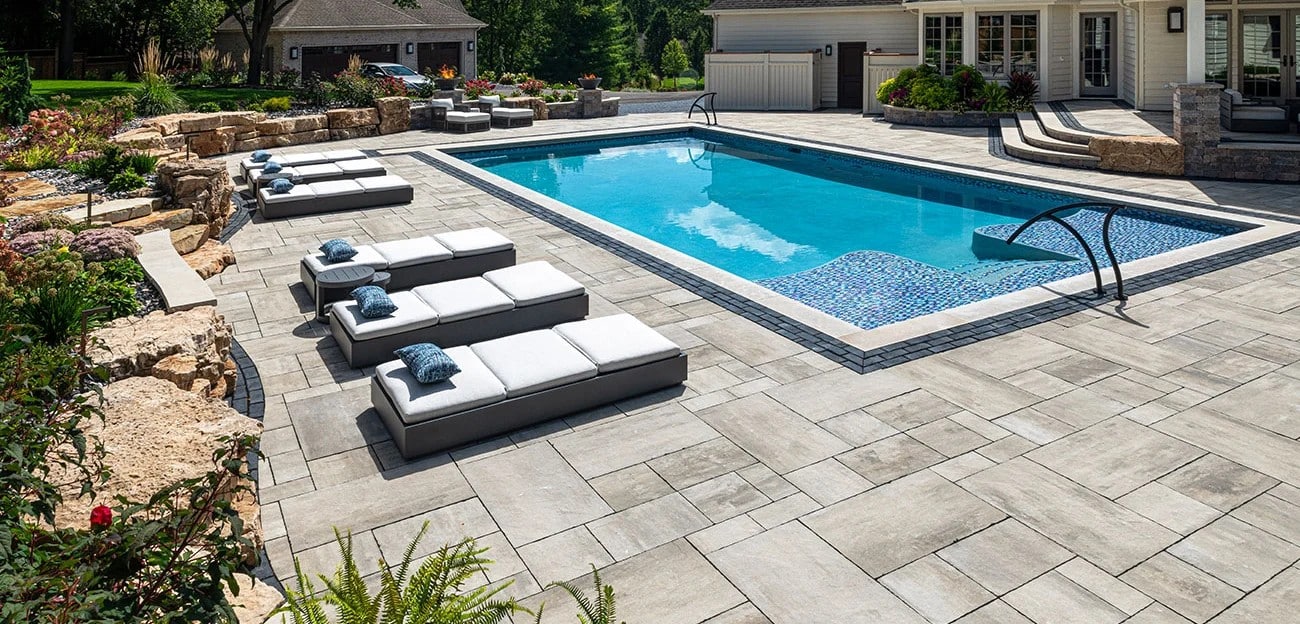
Pool Decks
Concrete pool decks in Texas fail because of the conditions they’re asked to perform in. Thermal expansion in summer heat, soil movement during wet and dry cycles, and the challenge of managing water at the pool coping interface all work against monolithic poured surfaces. Most concrete pool decks show visible deterioration within 5–7 years.
Interlocking pavers solve this at the structural level. The joints between individual units give the surface room to accommodate thermal movement without cracking. Individual pavers that are stained or damaged can be replaced without disturbing the surrounding surface. And on a 100-degree July afternoon in San Antonio, a textured paver surface stays meaningfully cooler underfoot than sun-saturated concrete.
- 4–6 inch excavation — calibrated for pool deck conditions
- Geotextile fabric separation layer
- Open-grade angular stone base
- Concrete beam edge restraint with rebar and fiberglass
- Cooler underfoot than concrete in direct sun
- Individual paver replacement — no slab repairs or patches
- Precision drainage slope away from pool equipment and structures
- Non-slip Unilock textures available
Service
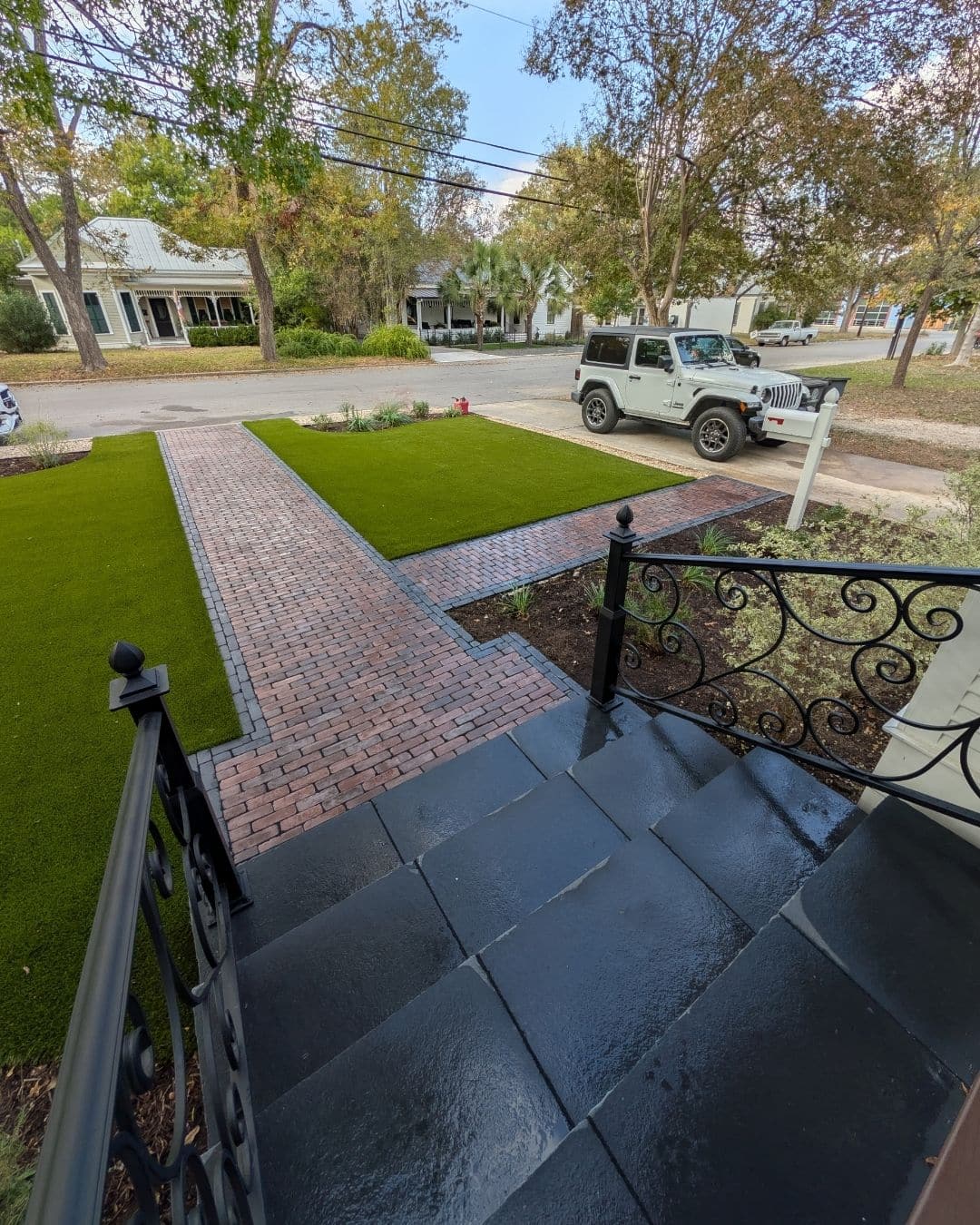
Walkways & Architectural Entrances
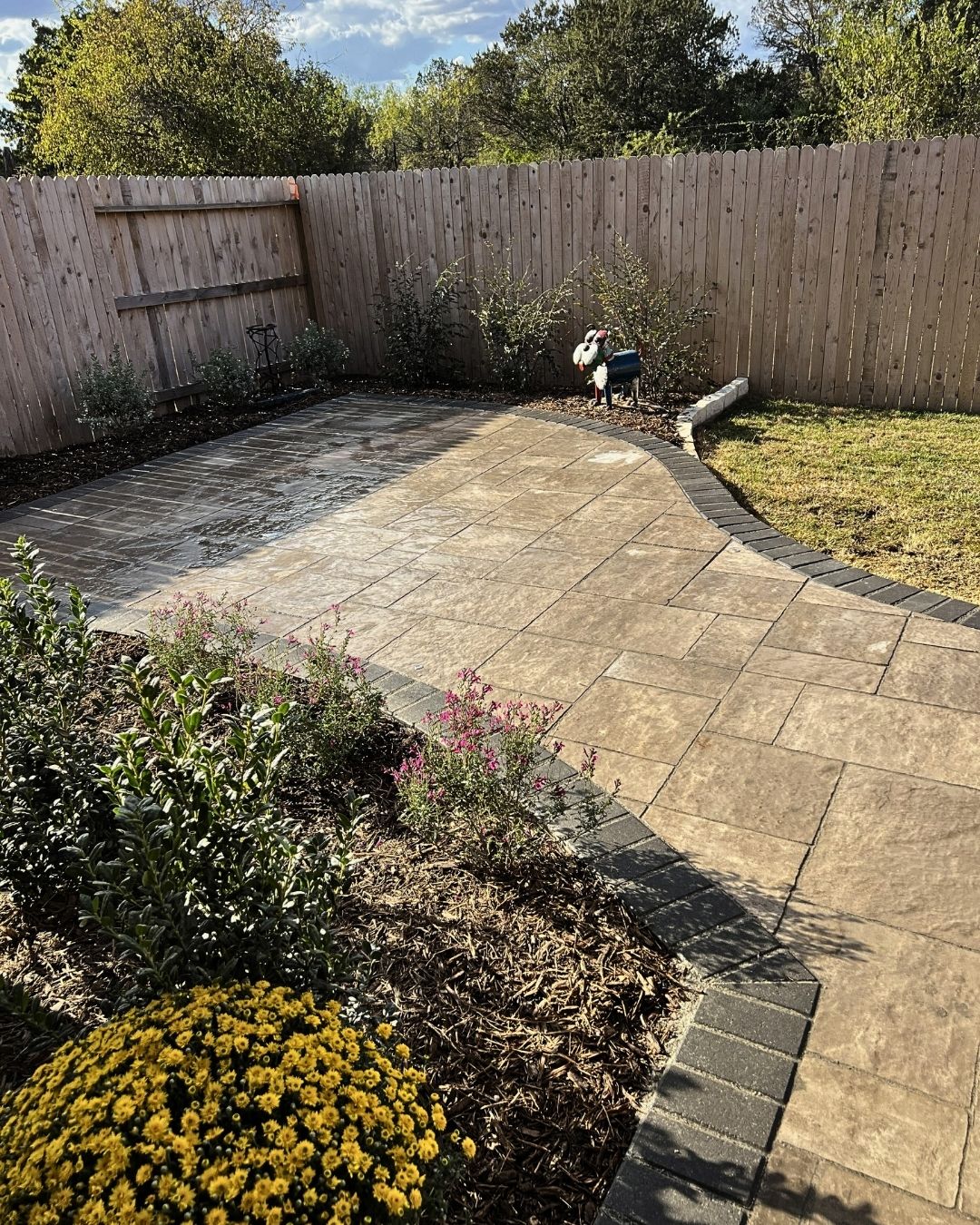
A front entry sets expectations. It’s the first thing anyone experiences arriving at your home, and it’s one of the most referenced elements in curb appeal. Done thoughtfully — with deliberate material selection, border detailing, and integration with the architecture — an entrance walkway becomes a defining feature of the property.
Beyond basic front paths, Vision Grounds designs and installs architectural entrance systems: grand steps with deep treads and proper riser proportions, custom masonry pillars that define property boundaries and arrival points, and walkway sequences that guide movement through the landscape.
- 4–6 inch excavation — appropriate for pedestrian loads
- Geotextile fabric separation layer
- Open-grade angular stone base
- Concrete beam edge restraint with rebar and fiberglass
- Front entry and arrival walkways — formal and organic layouts
- Architectural entrance steps with custom riser and tread design
- Border and decorative inlay detailing
Service
Structural Retaining Walls
The Texas Hill Country and the varied topography around Bulverde, Canyon Lake, and Spring Branch frequently present sites where grade changes need to be managed structurally — not just landscaped around. A retaining wall that fails creates a drainage and erosion problem that can affect structures, neighboring properties, and the hardscape it was meant to support.
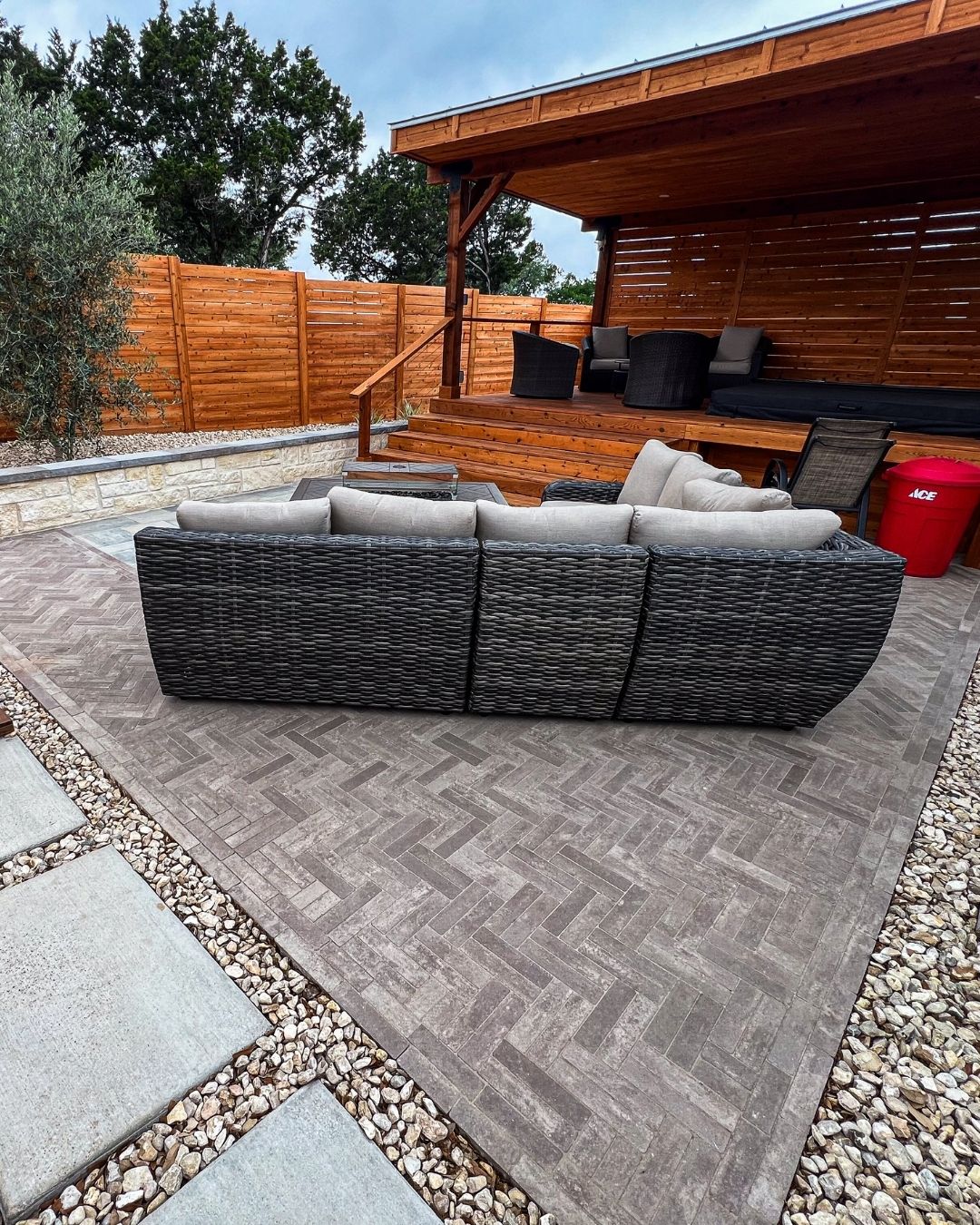
Vision Grounds builds retaining walls primarily as integrated elements of larger paver projects. Unilock’s retaining wall block systems are engineered for structural performance and integrate cleanly with the paver catalog, which means materials can be matched across the full scope of a project.
- Unilock retaining wall block systems — matched to paver selections
- Engineering consultation for walls over 24 inches
- Drainage planning behind wall structure — built in, not added later
- Terracing for multi-level outdoor spaces
- Integration with paver patios, driveways, and walkways
- Grade reclamation for sloped Hill Country lots
Service
Artificial Turf
Growing and maintaining natural grass in Central Texas is genuinely difficult. The combination of expansive clay soil, intense summer heat, and water restrictions means many homeowners spend significant resources each year on a lawn that never quite performs. Artificial turf eliminates that variable — delivering a green, usable surface year-round without irrigation demands.
We install artificial turf most often as part of larger paver projects — turf zones bordered by paver paths, or paver patios with adjacent turf areas that need to integrate cleanly at grade. Sub-base preparation ensures proper drainage and prevents the soft spots and uneven settling that occur when turf is laid directly over poor sub-grade material.
- Proper sub-base preparation and drainage — no soft spots or settling
- Drought-resistant — no irrigation required
- Pet-friendly and easy-to-clean product options
- Seamless grade-matched integration with paver installations
- Heat-resistant infill options for San Antonio summers